Conspiracy Theorists – please stop using the Biased Expert Fallacy

conspiracy theories - kid with telescope

Conspiracy Theorists – please stop using the Biased Expert Fallacy

It’s lazy, it insults the reader’s intelligence, and most importantly, it’s unethical.

The very best way to ensure that I don’t take seriously your warnings about your favourite conspiracy theory is to suggest, without clear evidence, that the regulator must be in cahoots with the industry/government. As soon as I see or hear that in a presentation, my bullshit detectors are on full alert.

What is the Biased Expert Fallacy?

We’ve all seen it – a regulator’s credibility is called into doubt because they used to work for one of the major companies in the industry they are now responsible for overseeing.  The implication being that because they are a “poacher turned gamekeeper” they will be unduly biased towards their former colleagues in the industry.

Assumptions – (they make an Ass out of U and Me)

That makes two very big assumptions: firstly that someone who has been in an industry can’t object to some of its less savoury practices; and secondly that simply having worked in an industry that you’re now regulating somehow automatically makes you dodgy. There is no rational reason to believe either of those things.  The first is simply illogical, as I will explain in a moment. The second is just insulting to the vast majority of regulators, most of whom do a spell in industry before crossing the divide into regulation.

Bordering on the libelous

A more pernicious form of the fallacy is to then go and suggest that the regulator is somehow ‘in the pocket’ of the big players in an industry. Or worse (and regrettably we see this all too often around the ‘alternative news’ and ‘truth warrior’ sites), questions are asked about whether the individual regulator is taking back-handers for their approvals, or for turning a blind eye.

And all that is typically wrapped up in a cowardly, arse-covering cop-out like “I’m not saying this is so, but just ask yourself …” Theorists, if you really believe somebody is on the take, have the courage of your convictions and make a straight accusation, don’t wrap it up in plausible deniability crap to save yourself from getting sued for your slanderous bile. That’s just cowardly.

To be clear, I’m not talking here about industries in which the regulator is voluntarily funded by the participants. There is a very clear ‘agency problem’ with that arrangement – which is why a number of the more questionable industries opted for voluntary regulation before it got foisted on them by statute. I’m talking about accusing individuals of malfeasance with no evidence whatsoever.

But I digress.

Why we need expert regulators

The people best placed to know whether individual players within an industry are up to something undesirable, are the very people who understand the industry. Experts who know that a particular process cuts corners or carries dangers that the layman wouldn’t recognise.  And who better to know the corners that get cut, than someone who has been on the inside, seen it first hand and decided to do something about it?

Someone on the inside

As I said earlier, the Biased Expert fallacy assumes that nobody from an industry can object to its dodgy practices. But surely it’s equally likely that an industry insider who then joins the regulator will be doing so precisely because they are concerned about dodgy practices, and they want to control them without risking their livelihood.

These insider experts know where to look, they know the questions to ask, they recognise incomplete answers, and they know how to spot abuses as they are happening.

The end-game

So what happens if the Biased Expert fallacy is allowed to take hold? The logical end-point is that no regulator will ever employ someone from within the industry, for fear of their credibility or impartiality being challenged. Or, at best, no-one from within the industry could ever rise to head up a regulatory body – which is not exactly going to encourage quality recruitment to regulatory positions.

We then end up with toothless and incompetent regulators, around whom the miscreant players can run technical rings, baffling them with industry jargon that the regulator isn’t up to speed about.  Sure, we can employ academics as regulators, after all, they should be at the cutting edge of the technology and theory.  But there is no substitute for someone who has actually been at the coal-face and can call bullshit on excuses and justifications.

Regulators with good intent

My biggest issue with the excessive use of the Biased Expert Fallacy is that it comes from a place of assuming wrong-doing. Anyone who has been employed in an industry is assumed to be crooked, or at least looking out for their mates, not the public. And heaven forbid that they should have been successful in the industry, and risen to any position of power – now they absolutely must be dodgy to want to join a regulator!

Whatever happened to innocent until proved guilty?

Damaging credibility (yours, not theirs)

Lazy conspiracy theorists all over are making the same mistake, of accusing potentially well-meaning regulators of self-interest purely on the basis that they have worked in the industry they are regulating. That results in a great many such accusations being defeated through simple lack of evidence. Or worse still, through evidence to the contrary.

And that’s a real problem for those of us who wish to challenge the accepted paradigms and are open to exploring whether the path(s) the world is on are in fact the best ones for humanity and the planet. Because every false accusation, every lazy assertion, every claim that doesn’t have adequate basis in demonstrable fact, each and every unjustifiable cry of “Wolf!” makes it harder for the real good guys to expose the real bad guys.

It’s lazy, it’s ineffective, and it harms your cause. Stop it.
Why local representation makes for bad democracy

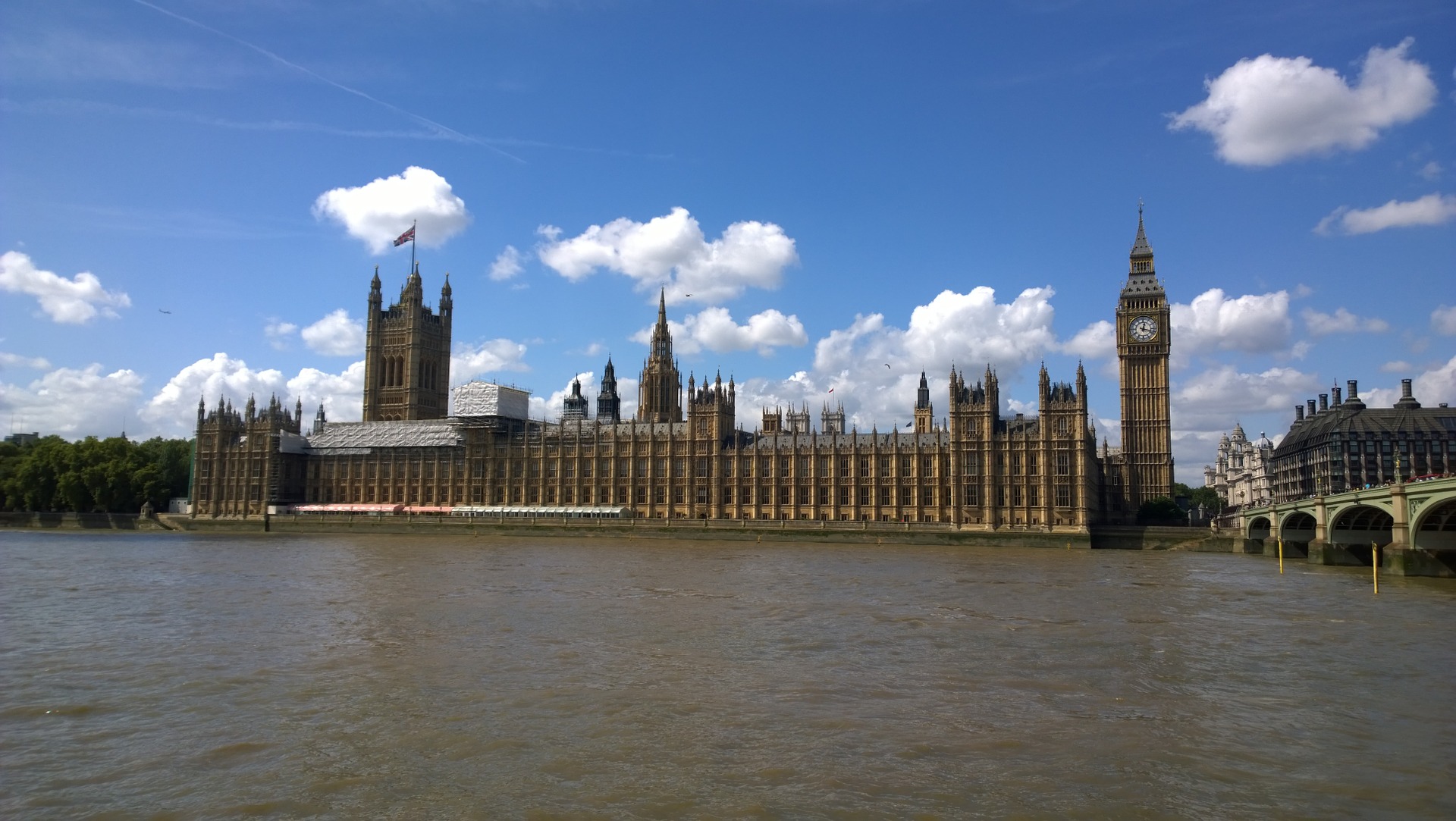
Houses of Parliament

The picture below shows the level of support in my local area for my political views – pretty much the lowest possible!

Source: uk.isidewith.com

So what, you might ask? Well, what it means is there is a very high possibility that my local representative will (1) not share my views and (2) be responsible for representing more people who disagree with me than agree with me.  It’s just isn’t possible for someone to do both.

I have posted before that the need for local representation was originally created in previous centuries, when your representative living a long way off meant that effectively only the very rich, who could afford to travel, would have their voices heard.  But that is not the case in the early 21st century – we regularly hold long and meaningful conversations with people on the other side of the globe, never mind the other end of the country.

You could argue that I can always move, if I want to be adequately represented.  After all, a quick trip down the South Coast line, and I’d be in sunny Brighton, where there is the strongest support for my views.  Even a little shuffle sideways into Kent would get me pretty strong agreement with my views, and a much greater chance of being well-represented.  But there are two issues with that: the first is, why should I (and all the other people of all political hues) have to move to get decent democracy? And the second is, that would create even greater division within our country.

I know I’m a bit weird, a bit of an outlier, but does that mean I lose my right to representation?  And what about all the other outliers – to left and right of me – do they not deserve real effective representation too?  Or is it only the middle ground, those willing to toe the various party lines, who get to have democracy?

The answer, as I have said before, is to move away from a party-based system of local representation, and instead have our representatives elected on the basis of the issues that they are willing to take up. Here’s the post where I first suggested this: http://life7bn.com/are-we-truly-represented/


What are organisations really for?

This is something I’ve been thinking about for a while – I think modern organisations – especially corporate ones – have forgotten what they are really for.

History of organisations

Back when people started to organise into collaborative groups, aka tribes, the purpose was initially strength in numbers. Over time, individuals gravitated to the tasks they were best at; and the tribe came to rely on them to get that task done. Whatever someone had a penchant for doing, so long as the tribe found that activity useful in some way – including pure entertainment value – the tribe would adjust itself to allow ways for each person’s special talent (or Genius, in my lexicon) to be used as fully as possible.

As tribes became cultures, and then societies, and then economies, they became too large to operate as a homogeneous whole, and they split into smaller units, each with a need for certain tasks too be carried out, and opportunities for those with a penchant for those tasks to provide value by doing them.

The first real commercial organisations were the crafts guilds, providing a way for talented people to learn a trade and bring their value to the world. From these came small businesses, with a Master taking on Journeymen and Apprentices – still with the purpose of making it possible for the individuals to bring their genius and value to others.

Rise of the Company

Then, at a certain point in history, mechanisation meant that if someone made a large investment in machinery, it was possible to generate more value from the same number of workers. And that was when the focus shifted from collaboration aimed at helping the individual’s talent reach the customer, to organisation aimed at getting the most from the machines in which the owners had invested their capital. Getting a return on capital took over as the primary concern; capitalism had arrived.

For a long time, capitalism played a valuable role in fuelling human development, and made significant contributions to improving mankind’s lot. The returns expected by the owners of the capital seemed justified, given the contribution they were funding to a better life. People stopped dying of preventable disease (in the developed world at least), and life-spans grew longer.

Shareholder Focus

Somewhere along the way, some bright spark had the idea of getting lots of people with money to each put in a bit of capital to buy machinery, build factories, develop new products, all in exchange for a share in the company – in the form of share certificates. So now, instead of one beneficial owner with a clear vision of what the business is there to do, there are multiple owners, who may or may not agree on its purpose.

Add to that the fact that these multiple owners then worked out that if you could get a nice return from a share in one business, you could probably do even better with shares in several. So each owner’s focus became less clear too – a recipe for confusion about what each business was supposed to be achieving.

Trading away purpose

And then another bright spark came up with the idea of an “exchange” where you could sell your shares, so now investors could easily get away from their involvement with the companies if they became irksome to them, or if things started going a bit pear-shaped. And yet another bright spark came up with the idea of putting your spare money (capital) into a “fund” that someone else would run, investing your money for you, in lots of different companies. And finally, a whole bunch of bright sparks came up with the idea of “derivative” investments, so they weren’t even investing in companies at all!

At every stage, ownership and control moved further away from any connection with what the business was actually for. Investors are no longer nobly contributing to something they want to see getting out into the world, they are just too far removed from what’s actually going on inside the companies. The only way they can know if their money is being used effectively is by the amount of profit they see getting paid out as dividends. The profit motive has now usurped the proper purpose of a business.

Real purpose

I believe if you go back to the origins of organisations, the proper purpose of any organisation, whether commercial, public sector or charitable, is to enable those who work in it to use their skills, talents and unique genius to make the world a better place for some group of other people – whether that’s by designing and building smart motor cars, by putting on amazing and amusing entertainment, or by providing the wherewithal to bring clean water to communities in the developing world.

And my question is: how can this true purpose retake the primacy that the profit motive usurped?